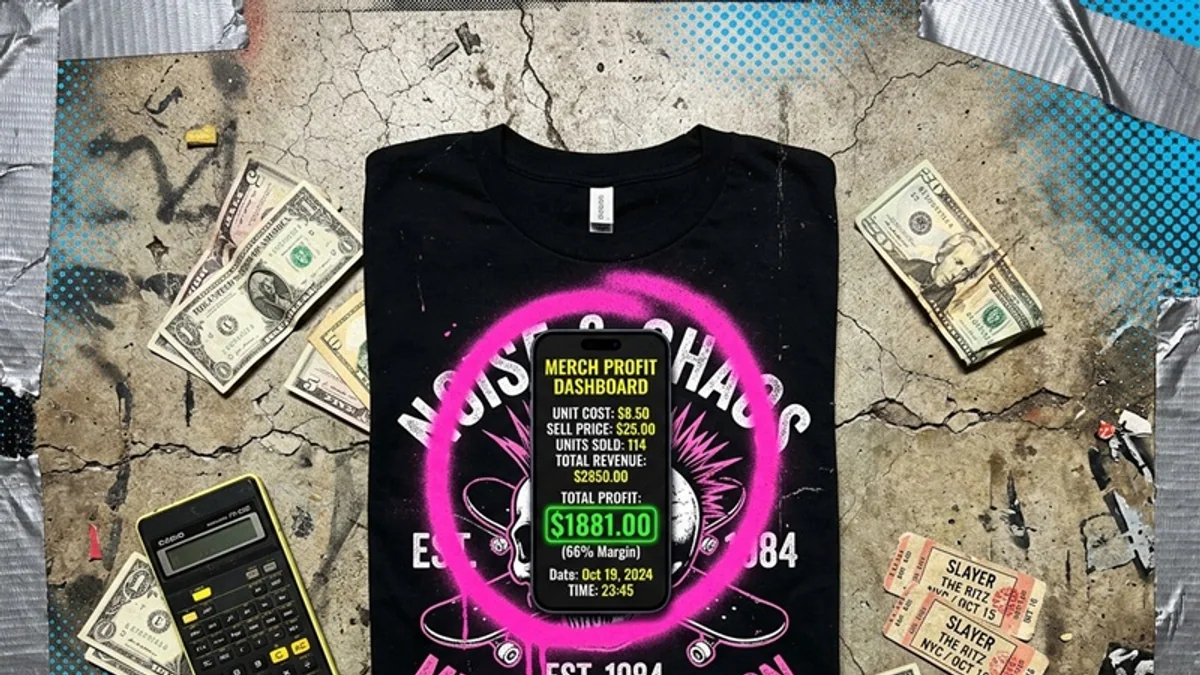
If you’re making creator merch, the price can feel scary.
Set it too low, and you work hard for very little money. Set it too high, and fans may stop before they buy.
Good pricing isn’t magic. It’s simple math plus a shirt that feels worth it.
We’ve seen that while building Teezzi. Creators move faster when the price is clear.
This guide will help you find your floor, set your price, and know what you keep.
Use this guide when the blocker is price and margin, not the storefront itself. For launch setup, go to the easiest way to sell merch online without buying inventory or how to start a merch line for free. For the page strategy that helps a fair price feel easier to buy, read why single-page creator merch stores convert better.
Why merch prices go wrong
Most creators start with the wrong question.
They ask, “What’s the lowest price that won’t make people mad?”
A better question is, “What price fits this shirt and still pays me?”
Prices also go wrong when the math is hard to see. Some tools show one number first, then hide the real costs until later. That makes the whole price feel shaky.
This gets worse on social media. A fan taps from TikTok or Instagram and decides fast. If the price feels random, the sale can die there. That’s one reason selling products from your TikTok link in bio works best when the product, page, and price all feel clear.
Start with your floor
Your floor is the lowest price that still covers the real cost of the shirt.
If you don’t know your floor, you’re not setting a price. You’re guessing.
That floor should come first. It should come before hype, before fear, and before what some other creator charged.
Know these three numbers
Before you launch, you should know:
- The sale price: What your fan sees.
- The floor: The lowest safe price.
- What you keep: The money left for you from each sale.
If you can’t say those three numbers fast, stop and fix the math first.
That’s a big reason creators care about the best print-on-demand platform for creators. The right tool shows the numbers before the page goes live.
Add profit on purpose
Once you know the floor, add the profit you want.
Don’t pick that part at random.
A drop takes work. You make the design. You post the link. You talk about it on video. You answer questions. If what you keep is tiny, the drop gets hard to push.
If the money feels too small, don’t just hope you’ll make it up with more sales. Raise the price or make the offer better.
Don’t race to the bottom
A cheap price can feel safe. Most of the time, it isn’t.
Fans don’t need the lowest price. They need a shirt that feels worth buying.
If the tee feels thin, rough, or cheap, a low price won’t fix that. It may only tell fans the shirt isn’t that good.
A better tee gives you more room to charge a fair price.
That’s why Teezzi is built around a premium Bella + Canvas 3001 tee at launch. A better blank helps the price make sense. If you want the deeper shirt quality breakdown, read the best quality print-on-demand shirts for creators.
Keep this rule in mind:
- Cheap shirt plus cheap price still feels cheap.
- Good shirt plus fair price feels much stronger.
- Panic pricing hurts trust and profit at the same time.
Use the say-it-out-loud test
Before you lock in the price, say it out loud the way you would in a TikTok, Reel, Story, video, or podcast ad.
If you feel like you need to say sorry for the price, the offer is off.
Ask yourself:
- Can I say this price with no stress?
- Does the page make the shirt look worth it?
- Will my fans get it right away?
If the answer is no, fix the offer first. You may need a better tee. You may need a better page. You may need a different price.
A short sales path helps too. Launching a link in bio merch store in minutes is easier when the offer is clear from the start.
How Teezzi helps with pricing
Teezzi keeps the pricing part simple.
There’s no monthly fee. There’s no upfront inventory cost. You get one branded page for one premium tee, so the offer stays easy to understand.
Here’s how it works:
- Claim your Teezzi link. You get one page for your drop.
- Upload your design. Teezzi turns it into mockups and a live product page.
- Set your price. You see the floor and what you keep before you publish.
- Share the page. Teezzi handles the storefront, printing, shipping, payments, and buyer support.
That means you don’t have to bounce between tools just to price one shirt.
If you want the no-inventory model, the easiest way to sell merch online without buying inventory breaks it down.
The launch limits should be clear too. Creators can sign up from around the world, but you need Stripe Connect in your country to get paid. At launch, buyers need a United States shipping address.
Clear prices help you sell more
When the price feels clear, you talk about the drop in a better way.
You sound more sure. The page feels more real. The shirt feels easier to buy.
That matters because fans can feel when you believe in the offer.
Clear pricing also helps you move faster. You spend less time second-guessing and more time sharing the drop.
If you’re still testing your first idea, how to start a merch line for free shows how to do that without upfront risk.
You don’t need the cheapest shirt. You need a price you can stand behind.
Frequently asked questions
How do I pick a good price for creator merch?
Start with your floor. Then add the profit you want. Last, ask if the shirt feels worth that price.
Should my first drop be cheap?
No. It should feel fair. A good tee with a fair price is better than a weak tee with a bargain price.
Do I need to buy shirts before I set a price?
No. Teezzi has no upfront inventory cost. A shirt is made only after a buyer places an order.
Can creators outside the US use Teezzi?
Yes. Creators can sign up globally. To get paid, you need Stripe Connect in your country. At launch, buyers need a United States shipping address.
What if a buyer has a problem with the order?
Teezzi handles buyer support. Teezzi doesn’t offer returns or exchanges for buyer’s remorse or wrong size picks. If the shirt has a print issue or shipping damage, Teezzi handles the refund or replacement.